.png)
The Brad Weisman Show
Welcome to The Brad Weisman Show, where we dive into the world of real estate, real life, and everything in between with your host, Brad Weisman! Join us for candid conversations, laughter, and a fresh take on the real world. Get ready to explore the ups and downs of life with a side of humor. From property to personality, we've got it all covered. Tune in, laugh along, and let's get real! #TheBradWeisman #Show #RealEstateRealLife
The Brad Weisman Show
Micro Markets Tell The Real Story Of Housing
Our Guest this week is Pete Heim
A national headline won’t tell you why locally we climbed 5.7% while the U.S. barely cleared 2.1%—but we will. We unpack the real numbers behind 2025’s housing market, spotlight the Northeast’s outsized role, and share what those trends mean for smarter decisions in 2026. From absorption near a month to a 23-day local average time on market, the signals point to a tight, resilient region where pricing strategy and product quality matter more than ever.
We also dig into the gap between seller expectations and reality. 8 out of 10 sellers think they’ll get over asking, but only 1 in 4 do—because price still sets the stage. With rates hovering near the low 6's and the long-term average near 7.7%, the “lock-in” freeze is thawing as life events push more owners to list. If mortgage rates slip under 6%, expect a wave of new inventory, better choice for buyers, and calmer, sustainable appreciation in the 3% to 4% range locally.
City markets remain pocketed and unpredictable: million-dollar rowhomes draw multiple offers in the right blocks while similar-price properties stall a few neighborhoods away. We explore how micro location, condition, and policy shape outcomes, from proposed rent caps in New York City to on-the-ground redevelopment stories like the Exeter Promenade. The through-line is clear: local economics and property rights guide investment, pricing, and timing far more than national averages do.
Want the edge for 2026? Use clean pricing, strong prep; watch neighborhood data, not just headlines; and track how rates and policy shifts could open or close windows. If this breakdown helped, follow the show, share it with a friend who’s planning a move, and leave a quick review to tell us what you want us to analyze next.
Hi This is Brad Weisman - Click Here to Send Me a Text Message
---
Welcome to The Brad Weisman Show, where we dive into the world of real estate, real life, and everything in between with your host, Brad Weisman! 🎙️ Join us for candid conversations, laughter, and a fresh take on the real world. Get ready to explore the ups and downs of life with a side of humor. From property to personality, we've got it all covered. Tune in, laugh along, and let's get real! 🏡🌟 #TheBradWeismanShow #RealEstateRealLife
Credits - The music for my podcast was written and performed by Jeff Miller.
Uh here we go.
SPEAKER_03:From real estate the market as a whole, it's been sometimes will affect it. Right, you know the real life. We all learn in the movies. If you think about it, Wayne Dyer might not attract everybody and everything in between.
SPEAKER_00:Mission was really to help people just to reach their full potential.
SPEAKER_03:The Brad Wiseman show. And now your host, Brad Wiseman.
SPEAKER_04:Okay, we are back. It's 2026. 2026. Hugo. Happy New Year to you, buddy. I mean, we had one show already that's under in the in the uh books uh last last week. Uh no, yeah, no. Yeah, you messed up. Yeah, last week. No, it was last week. Last week. And uh so this is um this good. This is good. Well it's 2026. We're we're doing well.
SPEAKER_00:That's right.
SPEAKER_04:Second weekend. Second weekend, yeah. That's right. So uh, and of course, because it's the second weekend, who do we have here? Peteheim. Pete Heim. We thought in 2025 we'd scare them away. It just didn't happen.
SPEAKER_02:It didn't happen. You're talking witch episodes, which I'm all confused already.
SPEAKER_04:No, it's we're just starting the year. It's all right. And and just so you know, I have a little bit of a cold. So if um if you hear some coughing, it is uh it's real. It's not AI. It's actually real. It's me actually coughing. No, I don't think I'm contagious anymore, Pete. I think I think it's actually just that lingering, annoying cough. God, the dry. Somebody just told me they had that for like four weeks. I'm like, Really? Oh my God, are you kidding me? Yeah. It is going around. Oh, it's gone around. Oh, it's totally gone around. Well, Hugo, you had it.
SPEAKER_01:Yeah, yeah.
SPEAKER_04:I think you had it over Christmas, you said, or something like that, around that time.
SPEAKER_01:Right after Christmas, yeah. Yeah.
SPEAKER_04:Yeah. You look okay though. You look good, yeah.
SPEAKER_01:I feel better.
SPEAKER_04:You feel better. That's good. That's good. All right. Well, let's talk about some real estate because uh obviously we have a whole year of numbers that we can draw upon, and that's kind of exciting. It's thrilling. It's it's th I wouldn't say it's thrilling, it's maybe exciting. It's borderline exciting, so that's not a crazy. But no, so as a as a whole for the year, I think it it went pretty damn well. It did, right? I mean, the overall market for for 2025 was good. It was very good. Yeah. Now, do you think that's just the northeast, or do you think that is just Pennsylvania? You think that's just Burks County, or is this something you feel throughout the k the nation was was good?
SPEAKER_02:It was our northeast region, pretty much, which carried the country. Because the country in some areas were negatives or whatever, and we leveled it out for the country. I mean 2.1% appreciation in the country. Which is still appreciation. We were higher than yeah, exactly. But we were higher than that. So I'm just gonna leave you in suspense over that one.
SPEAKER_04:Yeah, well, now you tell us where were we? Where were we? Where were we as a county this this the past year?
SPEAKER_02:Five point seven.
SPEAKER_04:Five point seven.
SPEAKER_02:That's where it was. That's a lot. It is. And Lebanon and Lancaster, they were like at five. Wow. So I mean that's our technical.
SPEAKER_03:Which shows you now what about the state?
SPEAKER_02:Did you look at the state numbers? The state was four point four point seven or four point eight or something like that.
SPEAKER_04:So that so that shows you the northeast pulling pulling it out for everybody.
SPEAKER_02:Because you have a national thing at 2.1. I mean, you got some areas that were negatives, right?
SPEAKER_03:Yeah.
SPEAKER_02:So yeah. So we really carried the country. Interesting. The Northeast did, yeah.
SPEAKER_03:Yeah.
SPEAKER_02:So how was your business, do you feel? My business was about 11% higher. 11% higher. Yeah. Yeah. In volume. More volume, yeah. More volume. Excellent. Yeah. Very cool. But I got Chris, you know, he'll who helps out, and I can't I can't do that myself anymore.
SPEAKER_04:Yeah, yeah. No.
SPEAKER_02:You know.
SPEAKER_04:Well, it's leverage. It is. Well, and it's also it comes down to like any business. How much time do you want to spend in the business? You know, right. There's you know, obviously, this is what you do for a living and you do it all the time, but there's a point where quality of life is definitely uh uh stu comes into play. Yeah, but so how about your personal business? Where was that? Good. Really good. I was it better? Better than last year. A lot. Like went up a lot. Okay. Almost doubled my business. Oh my god. But I had a bad year last year. I had a bad year last year. So yeah. So when you do nothing and then you do twice that, it's twice of nothing. Right, Hugo? Yeah, see, he knows the math. He knows, yeah. He does marriage counseling and he does math maths. He's the package. That guy's package. Math and well, marriage counseling is good. If you're good with math, because if the marriage doesn't work out, you need to know math. Because it's gonna everything's gonna be cut by 50 percent. Cook the books. Yeah, exactly. So, no, so no, I had a good year. Um and and thanks to my clients. It's not it's not me. It's all clients. Made some good relationships, obviously, through the years and and they were nice enough to give back to me. Yeah. Which was great. Isn't that great? Yeah, it's awesome. It's really awesome. It's humbling every year, isn't it? It is, it really is. Yeah, absolutely. So, what else you got here numbers wise? That like days on market and and where are we seeing uh where did we see stuff? And also, do you know how we what we kind of were saying, did it come out to where we thought it was gonna be? I know we said Burks, we were thinking like seven percent, weren't we? We were we were thinking seven percent. And we came in at five something. Five point seven. Yeah, okay.
SPEAKER_02:Okay, so we're we're a little off. I can give you those numbers and that you'll see why. Okay. So what I did was I took all the last year and compared it to twenty-four. Mm-hmm. Because now this is you're gonna maybe start to see ho folks if you're watching or listening that there's gonna there's a trend happening. Yeah. Okay, so units listed. So how many listings do we have? Residential listings now. This is Berks County, you mean residential no this is Berks County residential listings for the year. How many? Okay, we had four thousand eight hundred and five. Okay. All right. In twenty four we had four thousand six hundred and fifty-two. Okay. So there were more homes on the market. Yeah. Okay, which is I think that's where we're going. Yeah. Right? Absolutely. Um the volume, listing volume with uh well, that's actually it is more with more listings, but it's so it it makes sense. Is 1 billion five ninety-six three forty eight. For the country. For Berks County. One billion, oh volume. Volume, I'm sorry. Yeah, yeah, yeah. Well, I heard one billion. I was like, I was like, what the Yeah. And I know that was most of that was bread. Yeah.
SPEAKER_04:Because I went from zero to zero. Two times zero. Exactly.
SPEAKER_02:So I go I heard the boot. Yeah. Um and last year's uh listing volume was one point one billion four seven six. So this year we were one five nine six. So wow. There was more volume listing, and there were no numbers, more units. Okay. The absorption rate, man. I mean, it last year it was oh this pat this year it was one point one absorption rate is is the how long it takes, or no, how much inventory current inventory, how long it would take to get rid of all of it. Yeah, with no other listings coming in. Right. And what was it? It was one point one this year. This past year it was one in 24. So it would take a little over a month to go through all the inventory we have right now. Yep. In 24 it was a month. A month. Okay. Not big, but right? This one's this one's interesting. The units sold. The unit number of units that actually sold in 2025 was 4,087. Okay. In 24, it was 4,132. It's almost the same.
SPEAKER_04:It's very close. Yeah. So we have more units being listed, but uh very, very but about the same as we had sold.
SPEAKER_02:But but yeah, there was fewer fur fewer units by like what is that, 50? Yeah. But the volume one point 1.3 billion and last year it was 1.244. So pricing there's that 5.7%. Yeah, exactly. Yeah, absolutely. Days on market about the same. It was 23 versus 22 the previous year. Uh average sole price, it was 318,370, and that takes into account the city. Okay. Okay. And uh last year at that time it was three thousand three hundred and one. Okay. So um in twenty twenty-four the appreciation rate was six point two.
SPEAKER_04:Okay. All right. So we backed off a little bit. Yeah. I think it's gonna back off a little more this year.
SPEAKER_02:They're saying it's gonna be two. Um, but I think that's national, though. Yeah. I think we're gonna be four. Yeah is my prediction. Three four. Yeah. Which is coming into some hmm normalcy. Yeah, exactly. Wow. Yeah, and there's nothing wrong with that.
SPEAKER_04:No, no, no. That's okay. No, Hugo, don't get worried. Don't get worried. You're not worried, right?
SPEAKER_00:I'm just happy. All right. You look a little stressed out. Is he stressed? Is he stressed now? I don't worry. Yeah.
SPEAKER_04:All right. So what's funny about that, what I noticed when you were talking about your numbers, what you said that the average days on market for here was what? 23. And National's what? National's 63. Dude. It's a big difference. Yeah, it's a great area. It's three times. I mean, it's such amazing area here. Yeah, it is. It really is. I wonder how, you know, it's something I, you know, and we don't usually look at these numbers. I wonder how like Philadelphia's doing and and those surroundings. And also like the Pittsburgh Western areas. You know, you wonder, are they going through, you know, are they seeing what the nation is seeing, the bigger cities, or are they seeing pretty much what we're seeing? You know, you just wonder.
SPEAKER_02:You know, what's weird? I think Philadelphia is so pocketed. Yeah. Um, I Chris had this buyer that he bought in Society Hill for like this this row home for like 1.3 million or something. Oh my gosh. And there were like five or six offers on it.
unknown:Right.
SPEAKER_02:It's unbelievable. He listed one in another area in Philly for$244.9. I can't get rid of it.
SPEAKER_04:It because location.
SPEAKER_02:I uh yeah. Has to be. Or condition. It no. No. No, it's more the location, I think.
SPEAKER_04:It's just so pocket. Yeah, like you said. Yeah. Yeah.
SPEAKER_02:It's hard to take it.
SPEAKER_04:That's typical city, though. That's typical city.
SPEAKER_02:But it's hard to take the borough of Philadelphia and predict what the heck that is.
SPEAKER_04:Right, because the averages are so all over the place.
SPEAKER_02:They're all over the place. Absolutely. It's like what we always talk about, the micro locations are so important.
SPEAKER_04:Definitely is. Definitely is. So yeah, let's go. I'm gonna go into um I thought this was this was interesting too. Was price reductions have begun to show some more uniformity by region.
SPEAKER_02:Yeah.
SPEAKER_04:Now I'm not sure we've seen this or not. Now we're talking region northeast. That's us, or we would consider mid-Atlantic, but they don't split it that way. It's northeast and then it's um south southeast. They kind of split it that way. But it said that um last the percentage of listings with price reductions, and this is as of October 2025, um, was 14.5% in the Northeast, whereas everywhere else it's over 20%. Right. So they're saying that the Northeast is starting to catch up a little bit on price reductions. And really what that comes from is comes from sellers that are still thinking that we're in the 10% a year appreciation. And we're not.
SPEAKER_02:Yeah. Did you see that KCM thing on that point? No, I did not. Well, maybe I'm uh home sellers right now, eight out of ten think they're gonna get more than their ass price. Oh, wow. Do you know what the reality is?
SPEAKER_04:No.
SPEAKER_02:It's one out of four. Wow. It's twenty-five percent.
SPEAKER_04:So twenty-five percent are actually getting it. Yeah. Over ass price. And and a lot of it has to do with what the ass price is. Exactly. You know what I mean? If if you you know what I'm saying, like if you think about it, yeah. I mean, if if I ask twenty twenty percent over the last guy, yeah, I'm gonna there's gonna be a price reduction, and I'm not gonna get it.
SPEAKER_02:Yeah, you're a statistic.
SPEAKER_04:Yeah, yeah, exactly. So, you know, so price it, price it competitively, yeah, yeah, yeah. And you'll get maybe over full price. Exactly. Yeah, I think that's what it is, is that the mentality of of the sellers today, and we're not saying all sellers, you know, don't think we're picking on sellers. Nope, nope. Uh we love sellers. Yep. Um, but you know, the the the reality is some people just don't realize that they're not obviously watching our show, is what it is. Right, that's exactly what it's like. That's probably what it is.
SPEAKER_02:Yeah, so spread the word.
SPEAKER_04:If they watch the show, they'd know what the hell's going on. Um, but they they're not watching the show. But but if they're not following the trends, yeah, then they're gonna think that we're still going on this crazy ride. But if they're watching national news, they should know that that's not the case. It's changing, yeah. Yeah, yeah. Amazing.
SPEAKER_02:Yep. What else you got? I just wish they'd all watch our show. It'd be so much easier. Oh, I love that. Listen to that. I like listening. There we go. There we go. That's like uh great salmon used to do that. Yeah, he would have been used to do that. And then do the glass break. Yeah. Yep, yep. Um what do you else you got there? Uh oh well, because of the interest rates dropping, uh I I saw what's in store for 2026 pretty much.
SPEAKER_04:So a crystal ball or yeah, it was this one.
SPEAKER_02:Oh, it was the eight ball. Yeah, I checked it out and it said due to the fact that mortgage rates are dropping. Yeah. And they're at 6.2 today, um, there's some there's some other things coming along. Uh more homeowners now are getting ready to sell. In other words, did you see that stat about the three percent interest rate people are now starting to come equal to the six percent like like yeah, it was it like Oh, I see what you're saying. In 2020, when the rate started going up, was it 22? There was more people with three percent. Yeah. And now there was dwindling. Well, they're either they're paying it off, yeah, or they're or they're starting to sell their home now or whatever. For the decided reason.
SPEAKER_04:Where I would need where I need to be is more important than what I'm paying.
SPEAKER_02:Right. So there's less and less of those three percenters out there now. So what they're doing is, oh gosh, you know what? You know, I gotta get my uh I gotta get an in-law suite because my parents are coming to live with me, and so now I do have to sell now. Yeah. You know? So there's more more of that going on. Absolutely. And so that it I wish I had that graph because it was really starting to do this where they're just starting to come equal. Yeah, yeah, yeah. I did not see that. So that could that plays into that point though, with uh more there's gonna be more interest rate. It's that lock-in, we called it, the freeze. Yeah. That interest rate freeze is starting to thaw out.
SPEAKER_04:Well, because light, you know, if if you want to make a change in your life, move to Florida, move to wherever. Yeah. It gets to a point where you realize I can't keep waiting for this to change. Yeah. You know, you're we don't stop aging, we don't stop no, you know, whatever. So, you know, if you're gonna wait for it to get to 3%, you're gonna be dead probably. Yeah, it's you know, so it's it's best to move before you're not dead. Yeah. Because that move, the other that move when you're dead is a little different. It's a little different push outside. Yeah. And there's no interest rates involved. No, there's no interest. That's all cash. That's all that's strictly cash, yeah. Yeah, exactly.
SPEAKER_02:Oh my goodness. But but the point on that was, and I completely forgot what it is that's the same. What was your point anyway? What was your damn point? I mean, seriously. Well, people getting used to the fact that it is six percent. Yeah. And you know what? The national average over 40 years is still 7.7 interest rate. Yeah. And I think we take it over 40 years.
SPEAKER_04:I think if it goes under six percent, you're gonna see a major, major push of people listing their homes.
SPEAKER_02:And it could happen this year. Yeah, it's it's very possible.
SPEAKER_04:It's funny how we get used to we get used to um what we thought at when it first happened was ridiculous. Yeah. Oh, that's six percent. No way. You're praying for six percent.
SPEAKER_01:Right? Yeah. I'm below now. Oh, you're below that.
SPEAKER_04:But yeah, at one point you were praying for six percent, you know? But isn't that it's relative, you know? It's all relative to where you started. Yeah. If you started at seven to three quarters, you know, then it you're hoping for six.
SPEAKER_02:Yeah.
SPEAKER_04:Yeah, it's funny. That's a really weird. So, yeah, what else you got? Anything else?
SPEAKER_02:Uh well, you asked me to look into the promenade uh in Exodus. Yes, the promenade. And I did. I love it.
SPEAKER_04:That was uh actually one of our listeners asked about the promenade. And I'm not kidding. That's not bullshit. That's not bullshit. That's for real.
SPEAKER_02:She actually asked, What do you know about the promenade? Here you go. It's it's it's kind of simple. Um in 2019, I think it started that owner of that promenade was starting to go down, and they were starting, tenants were starting to leave. Exeter took it over in 20, and then that's when the last tenant left. Um, it was vacant and demolished in in 2020. Oh, wow. Okay. Then what happened was the Berks County Redevelopment Authority came in and purchased it for 2.4 million. Nice. It was under contract this year, folks. It and it fell through in March of 25. There were some um Berks redevelopment laws and guidelines that couldn't be met by the buyer. Oh wow. Okay, so it fell through. So I mean, if if you want to buy the promenade, it's on the market for 3.3 million. And this is just a land or is this a build-there's a building? It's now if you look at pictures, you can look it up. Um, look, you can Google Exeter Promenade and it and the Exeter Township website comes up. Yeah, and there's pictures. Oh wow. It's um, do you know Dr. Borha? It's right behind his office. Okay. Don't know. And it's you know, don't know. He's a good real good guy. Doc Doc Borja's a good guy. And there's you can see the entrance right next to his building. Oh, wow. And it looks like a couple of acres down where up you can see where a building was. Yep, yeah. It's like a big empty parking lot now. Unbelievable.
SPEAKER_04:Yeah.
SPEAKER_02:And that's what's why they took the buildings down, I have no idea. I maybe must have been uh code wise, it wasn't good. They must have been in bad shape. Yeah, yeah. Had to be. Well, there you go. It's it's on the market. 3.3 million. We should get two of them. It's with the purchase. So they're so cheap.
SPEAKER_00:Yeah. That's right. Let's buy two of those promenades.
SPEAKER_04:Let's go. Yeah.
SPEAKER_00:Have you gone to take your walk at the uh the Birchar Mole yet to see the final days?
SPEAKER_04:The final days. That's right. March is it still are they still staring? Yeah, exactly. Oh my goodness. It's March.
SPEAKER_02:March they're taking it over.
SPEAKER_04:Hugo and I are gonna go over there. He's gonna film me walking around.
SPEAKER_00:Oh, let's do it. Nostalgic walk. Nostalgic walk.
SPEAKER_04:Show where I worked, what I did, all the chicks I was hitting on. Oh man. We didn't get a hold of them. Now they're gonna think I'm part of the senior citizen walk. They're like, oh my God. He's part of the walk for the senior citizen. Closer to that than from the past. This is true. Hey, you know what? I can find somebody else to do this. No, but seriously, I am. That's really weird, right? Yeah. Yeah, I'm closer to that than I was to that. We all before. Yeah. Holy shit. Well, Hugo's now.
SPEAKER_00:In the night around.
SPEAKER_04:Yeah, yeah. All right. So uh let's talk about something else here. Yeah, right. Now, one of the other things that was um that we talk about the market um as far as time on the market, and it keeps on ticking, and it says all four regions. So this is back to the region thing is that all four regions saw your your year over year increases in time on the market reflecting broader cooling trends. And really, it's not a lot. I mean, year over year, there was eight plus eight days on the market in the West, and in the Northeast, once again, plus two. Yeah, well, like the North County plus one. Plus one in Merck's County. So, you know, it's just funny when you see that stuff to know that you know it's it's the things are changing, they're trending, but it's not like crazy numbers. They're not like jumping.
SPEAKER_02:No. It's market performance will hinge on local economy, right? So it's going to be more so divided because of that, right? Right. And so Northeast said two, we say one because we're Berks County, right? Um, so I think that we we have to really keep that in focus this year. Yeah. That um all your marketing or market of real estate is going to be hinged on local microeconomic conditions in your local area. Yeah. That's good. Look at look at poor Schuylkill County. Yeah. No industry anymore. And it's been years, right? But it's starting to build. It's starting to come back now. It's car yeah, it is coming back. They need to do more productive things there, though. Yeah, they really do. They gotta bring business in. Yeah. That's just an example. Yep. You know, I think of Centralia and some of those coal areas that just aren't aren't there. Centralia's really heating up though.
SPEAKER_04:It's really heating up up there. Sorry. People from Centralia are gonna be pissed about that. Actually, there's nobody there anymore, isn't it? Yeah.
SPEAKER_02:There's nobody there anymore. No, I heard it's a hot area.
unknown:Yeah.
SPEAKER_04:So, Hugo, do you know what Centralia is? It's an actual, it's a it's a town in Pennsylvania in Schuylko County that is literally on fire underneath it. Oh, really? It's it's a coal, it was a coal uh miners area. It was a coal area, and somehow a fire got started in one of the coal mines. And if you know about coal, it burns very slow and hot. And it's been burning for what, 50 years, 60 years? 50, 60 years. Yeah. Yeah. Underneath the town, you'll see smoke. The town is completely vacant. There's I don't think there's anybody living there anymore. And that you'll see smoke coming up out of the streets. Look it up. Anybody that's thinking I should have never flipped my cigarette down that hole. That was it was your fault, huh? It was your fault. But it's for real. If you ever get a chance, take your kids up there. You can still drive around.
SPEAKER_01:Wouldn't the miners like stop it though for the sake of the material to for the mining the they stop you do the reason they stop is because of the breathing of the air.
SPEAKER_04:It's not safe to be there. I mean you can drive through it and go there. Yeah, we put it. But it yeah, I've been through it and went through the town. But you know, you'll see smoke coming out of certain backyards and things like that. It's odd.
SPEAKER_02:You see you see a house and you see like five or six that used to be there. Yep. And it's the oddest thing.
SPEAKER_04:It's really weird.
SPEAKER_02:It's a ghost town. Yeah. It is a ghost town. It's such a shame.
SPEAKER_04:It is a shame.
SPEAKER_02:They need but they need something. I don't know. I can't why they can't figure that out. I don't know. They can't get that out.
SPEAKER_04:I think it's just it's so embedded. It's so embedded into the earth.
SPEAKER_02:I mean, I don't know how you stop it. It's almost like a volcano. Yeah. You can't stop a volcano. No. No. It's gonna go, it's gonna go, right?
SPEAKER_04:Or put a piece of gum in the hole. That should work. You should get up there. Yeah, I'm gonna do that. If I put a piece of gum in all the holes up there, that should that should suffocate it. That should do it. Yeah. Gum works for everything. If it does. You can fix a dam that. Oh, a duct tape. Absolutely. Duct tape works really well too. So the other thing, you know, I I thought that we should we looking at for this year, and and this is not a political statement, so don't take it that way. Well, you probably will. But um but no, but New York City. There's a new mayor in town. Yeah. Um and you know, there he definitely has some very, very um different ways of looking at governing the city. And he's mentioned it. It will be interesting to see if there's a mass exodus of landlords, business people, yeah. Uh, those kind of things, uh those kind of people coming out and putting their money somewhere else. Yeah. I'd be really interested to see what's gonna happen with that. We're gonna have to watch that over 2026 because I think that's gonna be something to watch. Um, I don't think it's gonna be, you know, we're not it's not pandemonium, but it it's there's people are gonna leave.
SPEAKER_02:It's it's a shame. He he's been open about wanting to destroy that with free housing and whatever else it was, or taking rents down or doing it.
SPEAKER_04:Well, no, they're there's a he's working on a rent cap.
SPEAKER_02:Rent cap.
SPEAKER_04:Yeah, as as realtors and as people that are in real estate, we don't believe in that. No, it's not free enterprise. It's not free enterprise. It's not also freedom for your property. That's right. Um, so anytime we we hear about eminent domain or and really in a way, that is eminent domain. It's a certain form of he'll get it. It really is eminent domain in a way, because you're controlling the rent, you're controlling the the the possibility of income on a property that somebody's maintaining and keeping.
SPEAKER_02:Yeah.
SPEAKER_04:And now the thing for me is that well, what if prices go up in the city? Like, how how does the landlord pay for the building? Yep. It doesn't make any sense. Taxes go up, and then the taxes go up on those people that are actually owning the building. Yeah. So it'll be really interesting to see that whole thing play out. Well, we'll see. We'll see what happens. So watch that. Watch that with us. In fact, if you see anything about that, let us know. We would love to know. And I'm not, hey, maybe we're wrong. Maybe it's gonna be great, but I still think it's it doesn't, it's not a left or right thing, it's about property ownership. I hope it goes well. Property rights.
SPEAKER_02:I think we all want the city to do well.
SPEAKER_04:Yeah, of course. Yes.
SPEAKER_02:I mean New York is like probably the most popular city in the in the world. I love New York. I mean, isn't there a song?
SPEAKER_04:Is there a song on the song something about? Yeah. But no, I love the city. You have these little town blues? Yeah, yeah, yes, exactly. Yeah, yes, exactly. Oh my god. If you can make it there, you can make it anywhere. But no, I I think I think it it's a great city. I hope that I'm I'm I'm praying that maybe his ideas are gonna work and it's gonna be great, but I I don't like people um going in on people's property rights. It doesn't work for me.
SPEAKER_02:Well, do you remember we got a lot of people down uh in Reading uh when 2001 uh uh 9-11 happened. Yeah, exactly. We got a ton of people in fact I've had some conversations with people in the city that said they were in they were in New York and had to leave and they they came here. There's a group of people that came here.
SPEAKER_04:They went to the Poconos, they went to here, they went to to um you know Schuylkill County, they went to all those places. So yeah, it'll be interesting to see. So we'll we'll keep an eye on that too. Yeah, thanks for mentioning that. Is there anything else? That's all I have today. Hugo, you have anything?
SPEAKER_01:No, no, no. Are you sure? Yes.
SPEAKER_04:You're good, you're good.
SPEAKER_01:I'm excited for 2026.
SPEAKER_04:So am I. It's gonna be great. So am I. I'm looking forward to it. Yeah, it's gonna be great. All right, that's about it. The real estate update for this month for January 2026. My goodness, where the heck did that go? It's unbelievable. Really? Oh my goodness. All right, so thank you for watching us every Thursday at 7 p.m. Please follow us every single Thursday in 2026. We really appreciate it. And that's about it. All right, take care of the

Podcasts we love
Check out these other fine podcasts recommended by us, not an algorithm.

THE ED MYLETT SHOW
Ed Mylett | Cumulus Podcast Network
Peace In The Storm Podcast
Andelina Grossi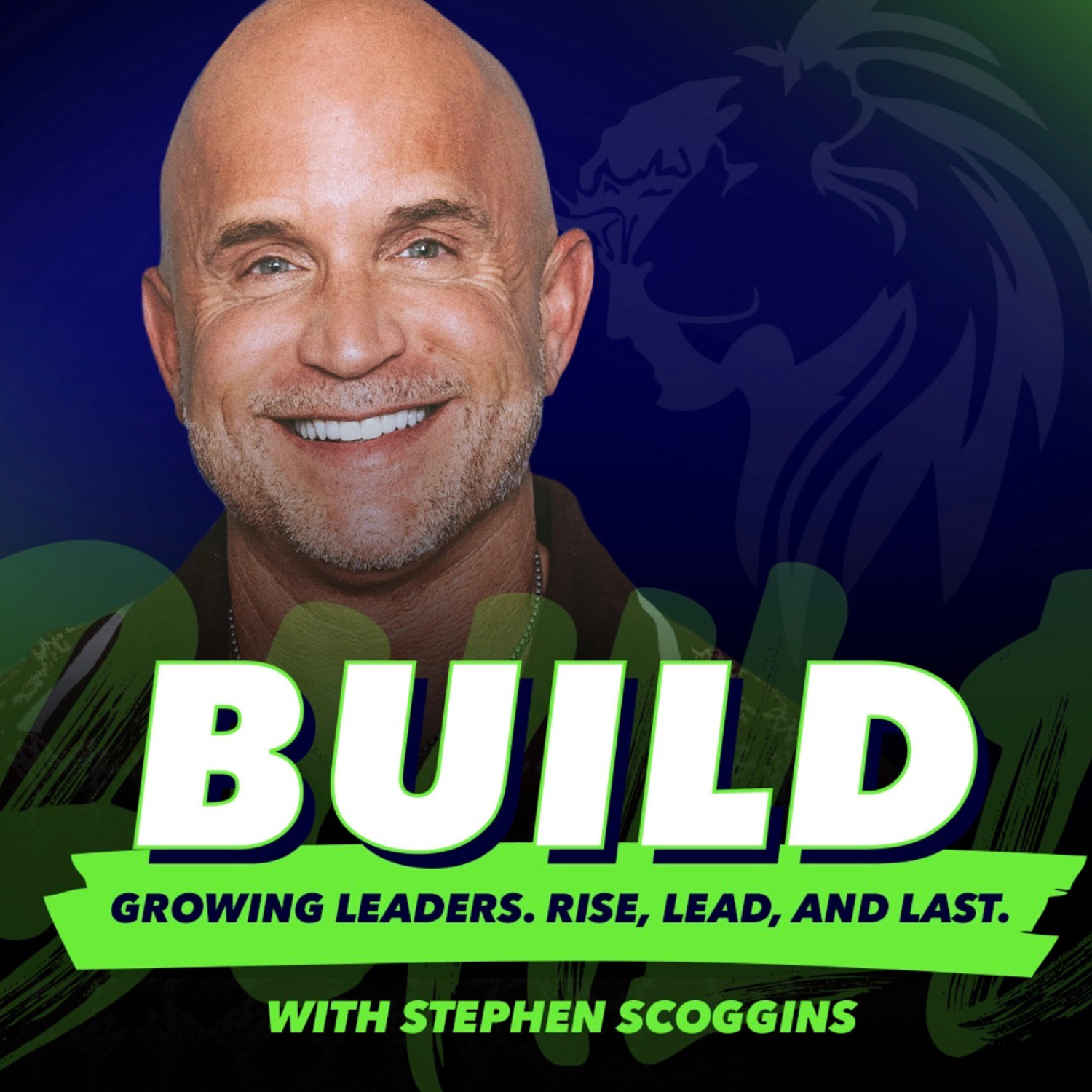
Build with Stephen Scoggins
Stephen Scoggins
The Dad Nation Podcast
Mitchell Osmond
Command Your Brand
Alex Latronico
Maxwell Leadership Podcast
John Maxwell
The Way I Heard It with Mike Rowe
The Way I Heard It with Mike Rowe